Table of Contents
Property Management Services in Turkey: How Non-Resident Owners Rent Out Their Apartments Remotely

Turkey has become an attractive destination for international property investors looking for rental income, long-term capital appreciation, or a property they can use in the future. Istanbul, Antalya, Ankara, Bursa, and other cities offer a wide range of residential investment opportunities, from modern apartments in large housing developments to smaller units in established neighborhoods.
However, owning property in Turkey does not necessarily mean living in the country. Many foreign investors purchase apartments in Turkey while residing in Europe, the Gulf, North America, or other parts of the world. Although remote ownership can offer attractive opportunities, it also creates practical challenges.
Managing a rental apartment from another country requires dealing with tenants, collecting rent, arranging repairs, monitoring expenses, renewing contracts, and ensuring that the property remains in good condition. Traveling to Turkey every time a tenant has a problem or a maintenance issue arises is neither practical nor cost-effective for most owners.
This is where property management services in Turkey become increasingly important. Professional property managers can handle the day-to-day responsibilities of renting and maintaining an apartment on behalf of an overseas owner, allowing investors to monitor their properties without being physically present.
This comprehensive guide explains how remote property management works in Turkey, what services management companies provide, how owners can rent out their apartments from abroad, what costs to expect, and how to protect their rental investment.
Why Do Non-Resident Property Owners Need Property Management?
Foreign investors purchase Turkish properties for different reasons. Some want to generate monthly rental income, others are interested in long-term capital appreciation, while some purchase apartments for future relocation or family use.
When the owner lives abroad, managing the property independently becomes more difficult.
Common challenges for overseas landlords
- Communicating with tenants in Turkish.
- Finding reliable tenants.
- Arranging property viewings.
- Collecting rent on time.
- Monitoring maintenance and repairs.
- Handling utility bills.
- Following apartment complex management fees.
- Dealing with tenant complaints.
- Managing lease renewals.
- Checking the apartment after a tenant moves out.
- Responding to emergencies.
- Handling legal and tax requirements.
A small maintenance issue can become expensive if it is not identified early. Similarly, an unsuitable tenant may create payment delays, property damage, or legal disputes.
Professional property management can help reduce these risks by establishing a local point of contact, providing regular reporting, and coordinating essential rental activities.
What Are Property Management Services in Turkey?
Property management refers to a range of professional services provided by a management company or property manager on behalf of the owner.
The objective is to rent out the property, maintain its condition, manage tenant relationships, coordinate expenses, and ensure that the owner receives clear information about the investment.
Typical property management services
- Rental marketing and advertising.
- Professional photography and video.
- Listing creation and promotion.
- Tenant inquiries and communication.
- Property viewings.
- Tenant screening.
- Rental price analysis.
- Lease preparation and coordination.
- Rent collection monitoring.
- Maintenance and repair coordination.
- Utility and building-fee monitoring.
- Property inspections.
- Lease renewal support.
- Move-in and move-out procedures.
- Monthly financial reporting.
- Coordination with accountants or lawyers when required.
The exact services depend on the agreement. Some companies provide only tenant-finding services, while others offer comprehensive management throughout the tenancy.
How Can Overseas Owners Rent Out Their Apartments Remotely?

A property owner living abroad can manage the rental process through a local property management company, supported by digital communication, documented approvals, and appropriate legal representation.
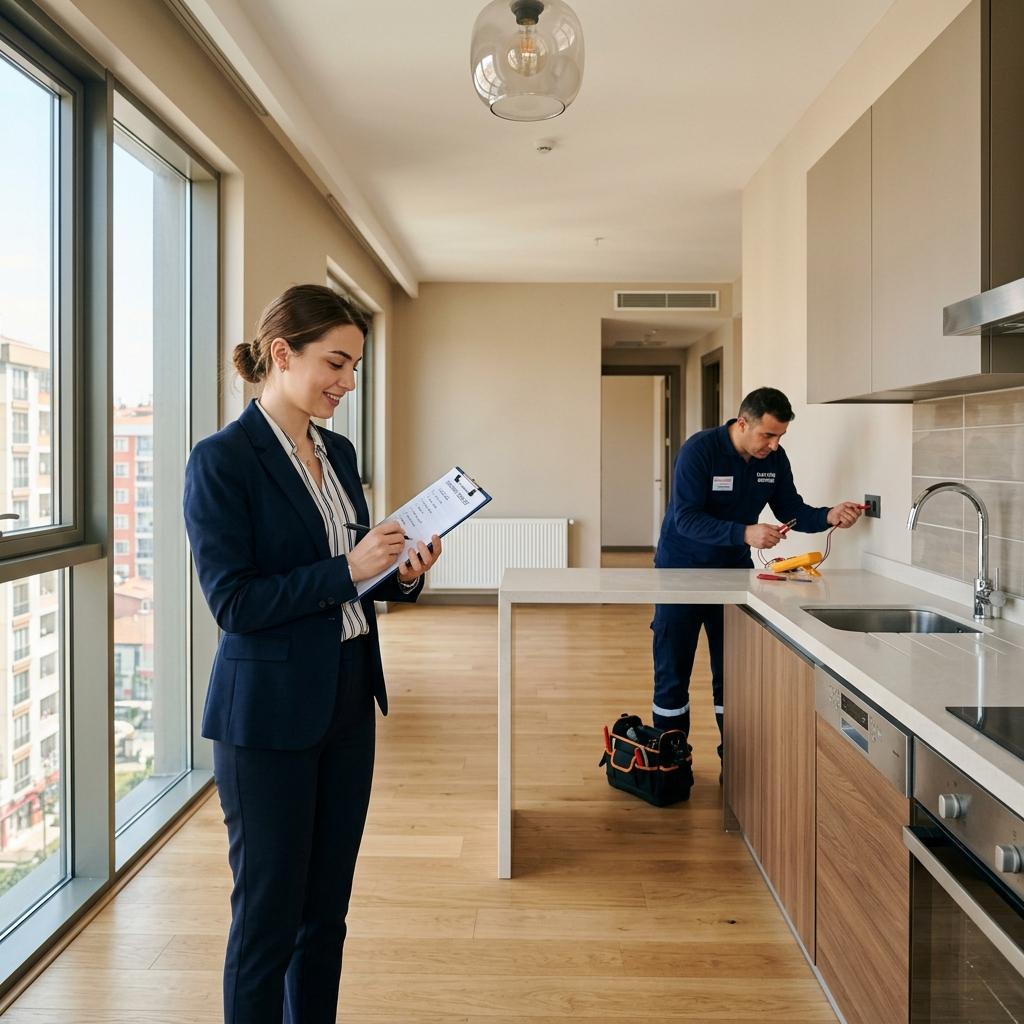
Step 1: Prepare the apartment for rental
Before marketing the property, the owner should ensure that it is ready for a tenant.
Preparation may include:
- Deep cleaning.
- Plumbing repairs.
- Electrical checks.
- Heating and air-conditioning inspection.
- Checking doors and windows.
- Preparing bathrooms and kitchen.
- Furnishing the apartment if necessary.
- Testing household appliances.
- Taking professional photographs.
A well-maintained and properly presented apartment is more likely to attract qualified tenants and reduce the time it remains vacant.
Step 2: Determine the appropriate rental price
Rental pricing should be based on actual market conditions rather than the owner's expectations alone.
Important factors include:
- Location.
- Proximity to metro stations and public transport.
- Apartment size.
- Number of bedrooms.
- Floor level.
- View.
- Building age.
- Quality of construction and finishing.
- Furnished or unfurnished status.
- Housing complex amenities.
- Comparable rental listings and transactions.
A property manager can analyze similar apartments and recommend a realistic rental price that balances income expectations with the likelihood of securing a tenant.
Step 3: Market the property
The management company prepares a professional listing with accurate property information, photographs, rental terms, location details, and amenities.
The property may be promoted through Turkish real estate websites, local broker networks, company marketing channels, and other suitable platforms.
The manager also handles inquiries, schedules viewings, and communicates with potential tenants.
Step 4: Select a suitable tenant
Tenant selection is one of the most important aspects of rental property management.
The property manager can assist with:
- Verifying the tenant's identity.
- Reviewing submitted information.
- Understanding employment or income information where lawfully available.
- Discussing the proposed tenancy period.
- Negotiating the deposit.
- Clarifying lease conditions.
- Assessing the tenant's suitability for the property.
Tenant selection should follow documented, fair, and legally appropriate criteria rather than relying solely on informal impressions.
Step 5: Prepare and sign the rental agreement
Once the parties reach an agreement, the lease should clearly define the terms of the tenancy.
It generally includes:
- Tenant and landlord information.
- Property address and details.
- Monthly rental amount.
- Payment method and due date.
- Lease duration.
- Security deposit.
- Utility responsibilities.
- Building management fees.
- Maintenance responsibilities.
- Property-use conditions.
- Procedures for notices and termination under applicable law.
An overseas owner should ensure that the property manager or representative has the appropriate authority to perform the agreed tasks.
Step 6: Manage the property after the tenant moves in
After the apartment is handed over, ongoing management begins.
This includes monitoring rent payments, handling maintenance requests, following utility expenses, communicating with the tenant, and documenting the property's condition.
A professional management arrangement should continue throughout the tenancy rather than ending once a tenant has been found.
What Services Does a Property Management Company Provide?
A. Rental marketing and tenant acquisition
The management company markets the apartment, prepares listings, arranges photography, responds to inquiries, and schedules property viewings.
Professional marketing can help the owner reach a wider audience and reduce the time the apartment remains vacant.
B. Lease administration
The manager can coordinate lease preparation, review the agreed rental terms, collect tenant information, arrange signing, and organize the handover process.
The owner should always receive copies of the signed lease and relevant documents.
C. Rent collection and payment monitoring
A property manager can monitor rental payment dates, send reminders, identify late payments, and report the amounts received.
For transparency, rental payments should be documented through appropriate banking channels, with clear instructions regarding the receiving account.
D. Maintenance and repairs
Property maintenance is especially important for owners who live abroad.
Management companies may coordinate:
- Plumbing repairs.
- Electrical work.
- Heating and cooling maintenance.
- Appliance repairs.
- Water leakage inspections.
- Door and window repairs.
- Emergency services.
- Contractor visits and follow-up inspections.
Owners should agree on a maintenance budget and a spending limit that the manager can approve without prior authorization.
E. Expense management
The property manager may monitor building fees, utility bills, repair expenses, insurance-related matters, and other property costs according to the agreement.
Every significant expense should be supported by documentation.
F. Monthly reporting
Regular reporting allows the owner to monitor the property remotely.
A monthly report should ideally include rental income received, outstanding payments, maintenance costs, building fees, tenant information, property status, photographs when necessary, and the final financial balance.

Full Management vs. Partial Property Management
Not every investor needs a comprehensive management package.
|
Service |
Partial Management |
Full Management |
|---|---|---|
|
Rental marketing |
Yes |
Yes |
|
Property photography |
Usually |
Yes |
|
Finding tenants |
Yes |
Yes |
|
Viewings |
By agreement |
Yes |
|
Lease coordination |
Optional |
Yes |
|
Rent monitoring |
Limited or excluded |
Yes |
|
Maintenance |
On request |
Ongoing |
|
Expense monitoring |
Usually excluded |
According to agreement |
|
Monthly reports |
Limited |
Usually |
|
Tenant communication |
Limited |
Ongoing |
|
Lease renewal |
Optional |
Usually |
|
Property handover |
Optional |
Yes |
How Much Does Property Management Cost in Turkey?
Property management fees depend on the location, apartment type, number of units, management services, and the agreement between the owner and the company.
Common pricing models include:
Percentage-based management fees
The company charges a percentage of the rental income in exchange for ongoing management. The contract should clarify whether the percentage is calculated on the rent due or the rent actually collected.
Fixed monthly fees
Some companies charge a fixed amount for defined services. This can be suitable for properties with limited management requirements.
Tenant-placement fees
A separate fee may be charged for marketing, finding a tenant, arranging viewings, and coordinating the lease, even if the owner does not subscribe to ongoing management.
Additional service charges
Additional costs may include cleaning, furnishing, photography, repairs, legal assistance, accounting, emergency visits, and property inspections.
Potential management costs
Long-Term Rentals vs. Short-Term Rentals
The choice between long-term and short-term rentals can significantly affect the profitability and complexity of property management.
Long-term rental properties
Long-term rentals are generally attractive to owners seeking more predictable income and fewer tenant changes.
Potential advantages include:
- More stable rental income.
- Fewer property handovers.
- Lower cleaning and furnishing turnover costs.
- Less frequent marketing.
- Easier remote management.
- More predictable operating expenses.
However, residential leases are governed by Turkish tenancy law, including specific rules relating to tenant rights, rent adjustments, termination, and eviction. Owners should not assume that they can increase rent or terminate a lease simply because they wish to do so.
Short-term and tourism rentals
Short-term rentals may generate higher gross revenue in certain locations, particularly tourist destinations and popular urban districts.
However, they require more intensive management:
- Booking management.
- Guest communication.
- Check-in and check-out.
- Cleaning between stays.
- Linen and supplies.
- Maintenance.
- Guest complaints.
- Reviews and ratings.
- Regulatory compliance.
In Turkey, residential rentals for tourism purposes for periods of 100 days or less are subject to the specific legal framework under Law No. 7464. A tourism rental permit is generally required before operating, and additional requirements may apply depending on the building and property type. Owners should verify eligibility, approvals, and licensing requirements before listing or accepting bookings.
For many overseas owners, long-term leasing may be operationally simpler, while short-term rentals require a specialized management operator familiar with the applicable licensing and operational rules.
Legal Considerations for Non-Resident Property Owners
Remote property management does not remove the owner's legal or tax responsibilities.
Power of attorney
An owner may authorize a representative, lawyer, or management company to carry out specific tasks on their behalf.
The power of attorney should clearly define the permitted activities and avoid unnecessary authority, such as selling or mortgaging the property, unless specifically required and intended.
Documents issued abroad may require apostille or legalization and certified Turkish translation, depending on the country of issuance and the intended transaction.
Rental agreements
A written lease should clearly define the property, the parties, rental amount, payment terms, deposit, duration, responsibilities, and legally applicable termination procedures.
Special situations, including furnished properties, foreign tenants, short-term rentals, or disputes, may require legal review.
Insurance
Owners should check whether mandatory earthquake insurance (DASK) applies and consider additional insurance covering other risks, depending on the property's needs.
Apartment complex fees
For apartments located in residential compounds, the owner should monitor management fees, common-area expenses, maintenance decisions, and other obligations established under the relevant rules.
Rental income tax
Rental income from property located in Turkey may be taxable in Turkey even when the owner lives abroad. Tax obligations depend on the owner's status, rental type, applicable exemptions, deductible expenses, and relevant tax treaties.
The Turkish Revenue Administration provides guidance concerning taxation of rental income, including income earned by non-residents, while applicable double-taxation treaties may affect how rental income is treated in the owner's country of residence.
Overseas landlords should consult a qualified accountant or tax adviser familiar with non-resident property owners instead of relying on outdated tax exemptions or filing deadlines.
How to Choose a Reliable Property Management Company
Choosing the right management company is one of the most important decisions an overseas investor can make.
Key selection criteria
Experience with foreign property owners: The company should understand remote ownership, international communication, rental payments, documentation, and reporting.
Transparent fees: Every management fee, tenant-placement fee, maintenance charge, and additional cost should be explained in advance.
Local presence: A team operating near the property can respond more efficiently to tenant issues, maintenance problems, and inspections.
Financial reporting: The company should provide regular statements showing income, expenses, and outstanding payments.
Maintenance documentation: Repairs should be supported by invoices, photographs, or work reports whenever appropriate.
Clear management agreement: The contract should specify services, authority, spending limits, payment arrangements, termination conditions, and responsibilities.
Multilingual communication: Arabic- or English-speaking staff can be particularly helpful for international investors who are unfamiliar with Turkish rental procedures.
How Can Owners Monitor Their Properties Remotely?
Digital tools make it easier for overseas owners to manage their investments without regularly traveling to Turkey.
Useful digital tools
- Messaging applications for communication.
- Email for approvals and documentation.
- Monthly PDF financial reports.
- Photographs and videos of property inspections.
- Video calls for remote inspections.
- Digital rent and expense tracking.
- Bank transfers with clear records.
- Electronic document storage.
- Maintenance tracking systems.
- Electronic signatures where legally accepted.
Example of a monthly property report
|
Report Item |
Information |
|---|---|
|
Property status |
Rented, vacant, or under maintenance |
|
Rent due |
Contractual amount |
|
Rent collected |
Actual amount received |
|
Expenses |
Repairs, fees, and utilities |
|
Tenant status |
Payment history and observations |
|
Maintenance |
Completed and pending work |
|
Photographs |
Recent images when required |
|
Balance |
Income less recorded expenses |
|
Recommendations |
Decisions requiring owner approval |
Property management services in Turkey have become an important solution for foreign investors who own apartments but do not live in the country.
Remote property management involves much more than finding a tenant. It includes marketing, lease administration, rent collection, maintenance, financial reporting, tenant communication, and compliance with relevant legal and tax obligations.
Choosing a reliable management company, defining its authority, documenting every transaction, and monitoring performance regularly can help owners reduce risks, preserve property value, and achieve more stable rental income.
For investors living outside Turkey, professional property management offers the opportunity to benefit from their real estate investment without having to remain physically present, while still retaining control over important financial and administrative decisions.

We, at Damas Group Real Estate, bring you the best property options for sale in Ankara, Turkey in 2023. We're here to help you seize the best investment opportunities in major construction projects and residential complexes at competitive prices.
Our services include providing all kinds of legal and real estate consultations, obtaining property deeds, and assisting you in acquiring Turkish property residency and citizenship, along with other post-sale services.
Feel free to reach out to us to learn more!
FAQ
Yes. Foreign property owners can generally rent out their Turkish properties while living abroad. They can appoint a property manager or legal representative to handle marketing, leasing, rent collection, maintenance, and related administrative tasks.
Most routine property management activities can be handled remotely, including tenant communication, rent monitoring, marketing, maintenance coordination, and financial reporting. Some legal procedures may require a power of attorney or specific documents.
Fees vary depending on the company, property location, management package, and services required. Companies may charge percentage-based fees, fixed monthly fees, tenant-placement fees, or separate charges for maintenance and additional services.
Rental income from properties located in Turkey may be subject to Turkish taxation even when the owner lives abroad. The applicable obligations depend on the rental type, tax status, exemptions, deductible expenses, and relevant tax treaties.
Not necessarily. Short-term rentals may generate higher gross revenue in certain locations, but they require more intensive management, frequent cleaning, booking coordination, and regulatory compliance. Long-term rentals may offer a simpler and more predictable management structure for overseas owners.