Table of Contents
Introduction: Why Does Turkey Welcome Millions of Visitors Every Year?
Turkey is one of the world’s most attractive tourism destinations, combining a strategic location between Europe and Asia with a remarkable mixture of history, culture, nature, cuisine, shopping and modern urban life.
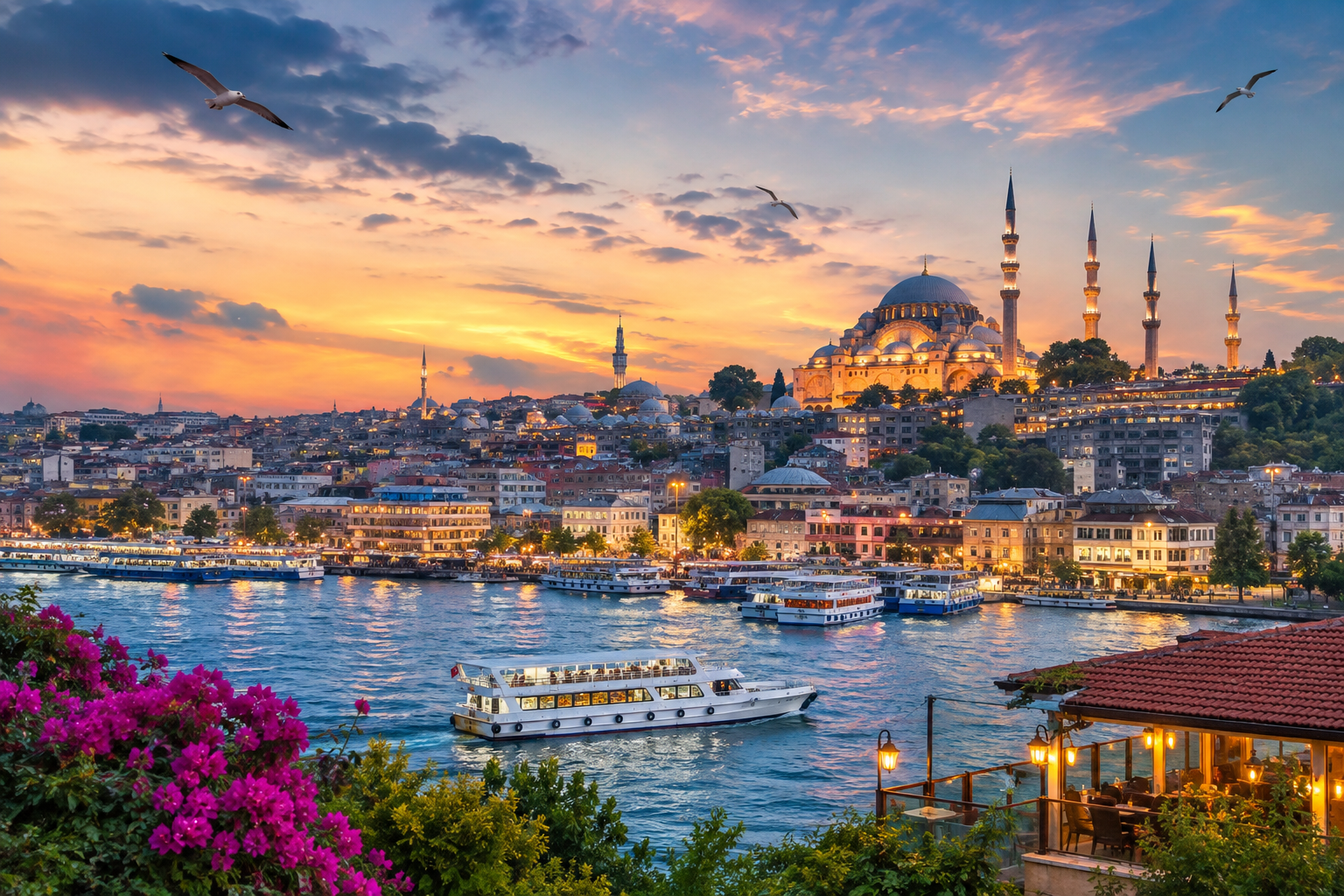
At the center of this tourism appeal is Istanbul, a unique transcontinental city divided between Europe and Asia by the Bosphorus Strait.
Official tourism statistics show that Istanbul received 1,359,798 foreign visitors in January 2026, representing a 7.18% increase compared with January 2025.
Istanbul is not simply a city filled with monuments. It offers a complete travel experience: Byzantine and Ottoman heritage, historical bazaars, modern art, restaurants, cafés, nightlife, waterfront districts and spectacular Bosphorus views.
Istanbul: A City Between Two Continents
One of Istanbul's defining characteristics is its geographical position.
The Bosphorus separates the European and Asian sides of the city, creating an urban environment unlike almost anywhere else in the world.
The city has also been shaped by centuries of political, commercial and cultural development. The Historic Peninsula contains many of its most important attractions, including Hagia Sophia, the Blue Mosque, Topkapi Palace and the Basilica Cistern.
At the same time, modern districts such as Galata, Karaköy, Beyoğlu, Kadıköy and Moda provide a completely different atmosphere.

Top Tourist Attractions in Istanbul
Hagia Sophia
Hagia Sophia is one of Istanbul's most recognizable landmarks.
Originally constructed during the Byzantine period, it later became an Ottoman mosque, then a museum, and returned to mosque status in 2020.
Its monumental dome, mosaics, historical layers and architectural details make it an essential stop for first-time visitors.
Blue Mosque
The Blue Mosque is located in Sultanahmet, close to Hagia Sophia.
It is one of the best-known examples of Ottoman architecture and is particularly famous for its elegant domes, minarets and interior decoration.
Because of its location, visitors can easily combine it with Hagia Sophia, Topkapi Palace and the Basilica Cistern.
Topkapi Palace
Topkapi Palace was one of the most important centers of the Ottoman Empire.
Today, its courtyards, historical buildings, collections and exhibits provide visitors with an opportunity to explore Ottoman history.
The palace is located in the Historic Peninsula, close to several of Istanbul's most important attractions.
Basilica Cistern
The Basilica Cistern is one of Istanbul's most unusual historical attractions.
Located underground, it offers a completely different atmosphere from the city's mosques, palaces and museums.
Its columns, architecture and carefully designed lighting make it particularly interesting for photographers and travelers looking for a unique experience.
The Grand Bazaar
The Grand Bazaar is one of Istanbul's most famous shopping destinations and one of the world's historic covered markets.
Its origins go back to the Ottoman period, and today it contains an extensive network of streets and shops selling carpets, jewelry, ceramics, textiles, leather goods, lamps, souvenirs and traditional products.
Visitors should compare prices and take their time, particularly when purchasing expensive products.
Spice Bazaar
Located in Eminönü, the Spice Bazaar is ideal for visitors interested in Turkish food and traditional products.
You can find spices, tea, dried fruits, nuts, sweets and other local specialties.
It can easily be combined with Eminönü, the Galata Bridge and a Bosphorus cruise on the same day.
The Bosphorus
The Bosphorus is arguably the defining feature of Istanbul.
It divides the city between Europe and Asia and provides spectacular views of historic palaces, waterfront mansions, bridges and landmarks.
A Bosphorus cruise is highly recommended, especially around sunset.
Important sights along the Bosphorus include:
Dolmabahçe Palace.
Beylerbeyi Palace.
Rumeli Fortress.
Maiden's Tower.
Ortaköy.
Historic waterfront mansions.
Istanbul's bridges.
Galata Tower and Galata
Galata is one of Istanbul's most atmospheric neighborhoods.
Galata Tower offers impressive city views, while the surrounding streets contain cafés, restaurants, boutiques and historic buildings.
The area can easily be combined with Karaköy, Istiklal Street and Taksim Square.
Istiklal Street and Taksim Square
Istiklal Street is one of Istanbul's most famous pedestrian-oriented urban areas.
It is lined with shops, cafés, restaurants and historic buildings and connects naturally with the wider Beyoğlu and Galata area.
The district is particularly lively in the evening.
Karaköy and Galataport
Karaköy has developed into one of Istanbul's popular contemporary districts.
It combines historic architecture with cafés, restaurants, cultural venues and modern waterfront developments.
The official Istanbul tourism destination guide highlights Karaköy, Galataport, Istanbul Modern and nearby cultural attractions as important parts of the city's contemporary tourism scene.
Istanbul's Asian Side
Travelers should not limit their trip to the European side.
Kadıköy, Moda, Üsküdar and Kuzguncuk offer a different side of Istanbul, with local restaurants, cafés, markets, waterfront walks and residential neighborhoods.
The official GoTürkiye destination guide includes Kadıköy, Moda, Üsküdar, Kuzguncuk and Beylerbeyi among the Asian-side destinations worth exploring.
Princes' Islands
The Princes' Islands offer an escape from the intensity of central Istanbul.
Büyükada is one of the best-known islands and can be visited as a day trip.
The islands are particularly attractive for travelers looking for a slower pace, sea views and walking.
Because ferry schedules can vary, it is advisable to check the current timetable before planning the trip.
Istanbul Tourism: Suggested Five-Day Itinerary
|
Day |
Suggested Program |
|
Day 1 |
Hagia Sophia, Blue Mosque, Basilica Cistern and Topkapi Palace |
|
Day 2 |
Spice Bazaar, Eminönü, Galata Bridge, Karaköy and Bosphorus cruise |
|
Day 3 |
Galata Tower, Galata streets, Istiklal Street and Taksim |
|
Day 4 |
Üsküdar, Kadıköy and Moda |
|
Day 5 |
Shopping, museums, relaxation or an additional neighborhood |

Best Areas to Stay in Istanbul
Sultanahmet
Best for first-time visitors who want to stay close to the city's major historical landmarks.
Beyoğlu and Taksim
Suitable for travelers who prefer restaurants, cafés, shopping and nightlife.
Karaköy
A good option for visitors looking for a contemporary atmosphere near the waterfront.
Kadıköy
Ideal for travelers who want to experience the Asian side and a more local urban atmosphere.
Turkish Cuisine and Istanbul Tourism
Food is an essential part of the Istanbul experience.
Visitors can try:
Kebabs.
Döner.
Köfte.
Simit.
Börek.
Mantı.
Turkish breakfast.
Seafood.
Baklava.
Turkish delight.
Turkish coffee.
Turkish tea.
Istanbul also offers modern gastronomy and high-end dining alongside traditional restaurants and street food. GoTürkiye highlights Istanbul's diverse food culture as one of the city's major experiences.
Best Things to Do in Istanbul
A successful Istanbul itinerary should combine sightseeing with experiences.
Take a Bosphorus cruise
One of the best ways to understand Istanbul's geography and architecture.
Explore historic bazaars
The Grand Bazaar and Spice Bazaar are essential stops.
Experience Turkish breakfast
A traditional Turkish breakfast can become one of the most memorable parts of a trip.
Explore Fener and Balat
These historic neighborhoods offer colorful streets, old buildings and a distinctive local atmosphere.
Visit museums
Istanbul has museums covering archaeology, Ottoman history, modern art and cultural heritage.
Explore modern shopping
Alongside historic bazaars, Istanbul offers numerous contemporary shopping centers.
How Many Days Do You Need in Istanbul?
For a first visit, four to five days is a comfortable starting point.
Three days can cover the major highlights, but the itinerary will be relatively busy.
Five days allows visitors to combine the Historic Peninsula, Bosphorus, Beyoğlu and the Asian side.
Seven days or more provides enough time for a deeper exploration, including the Princes' Islands and less tourist-oriented neighborhoods.
Best Time to Visit Istanbul
Istanbul can be visited throughout the year.
Spring is ideal for walking and outdoor sightseeing.
Summer offers long days and a lively tourist atmosphere, although it can be busier.
Autumn is attractive for travelers who prefer moderate weather.
Winter brings colder weather and a different atmosphere, with occasional snow.
There is no single perfect season for everyone; the best time depends on your preferred activities and travel style.
Family Tourism in Istanbul
Istanbul can be an excellent destination for families.
Instead of spending every day visiting museums, families can combine:
Parks.
Bosphorus cruises.
Historical landmarks.
Shopping.
Restaurants.
Waterfront walks.
Entertainment.
Princes' Islands.
A balanced itinerary with regular breaks is particularly important when traveling with children.
Istanbul for Photography Lovers
Istanbul offers countless photography opportunities.
Popular locations include:
Bosphorus.
Galata Tower.
Ortaköy.
Üsküdar.
Sultanahmet.
Fener and Balat.
Galata Bridge.
Kadıköy.
Moda.
Historic palaces.
The same location can look completely different in the morning, at sunset and at night.
Practical Tips for Visiting Istanbul
Do not try to see everything in one day.
Group attractions by neighborhood.
Use public transportation whenever practical.
Wear comfortable shoes.
Compare prices when shopping.
Respect local rules when visiting mosques.
Check official opening hours and entrance requirements before visiting attractions.
Why Does Istanbul Continue to Attract Millions of Tourists?
Istanbul's tourism strength comes from a combination of factors.
Its geographical location connects two continents. Its historical heritage includes Byzantine and Ottoman landmarks. The Bosphorus provides an extraordinary natural setting. Its cuisine offers enormous variety, while its bazaars and modern shopping districts appeal to different types of travelers.
Most importantly, Istanbul offers different experiences within the same city.
A visitor can explore a centuries-old palace in the morning, shop in a historic bazaar in the afternoon, cross from Europe to Asia by ferry and enjoy dinner overlooking the Bosphorus in the evening.
That diversity is one of the main reasons Istanbul remains one of Turkey's most important tourism destinations.
Istanbul tourism is much more than a collection of famous monuments.
It is an experience built around history, culture, food, shopping, nature, architecture and the unique geography of a city located between Europe and Asia.
From Hagia Sophia and Topkapi Palace to the Grand Bazaar and Spice Bazaar, from Galata and Karaköy to Kadıköy and Üsküdar, and from traditional Turkish cuisine to a sunset cruise along the Bosphorus, Istanbul offers enough variety to justify repeated visits.
With more than 1.35 million foreign visitors recorded in January 2026 alone, according to Istanbul's official tourism statistics, the city's international tourism appeal remains strong.
For first-time visitors, a carefully planned four- or five-day itinerary is an excellent starting point. Those with more time can explore Istanbul beyond its famous landmarks and discover the neighborhoods, food culture and local experiences that give the city its distinctive character.
FAQ
Four to five days are generally a good starting point for a first visit. This allows travelers to explore the Historic Peninsula, Grand Bazaar, Bosphorus, Galata, Beyoğlu and at least part of the Asian side without rushing.
Major attractions include Hagia Sophia, the Blue Mosque, Topkapi Palace, Basilica Cistern, Grand Bazaar, Spice Bazaar, Galata Tower, Istiklal Street, the Bosphorus, Ortaköy, Kadıköy and Üsküdar. The official GoTürkiye guide provides a broad overview of Istanbul's destinations.
Istanbul is a year-round destination. Spring and autumn are particularly suitable for walking and outdoor sightseeing, while summer offers longer days and a lively atmosphere. Winter provides a quieter and distinctly different experience.