Table of Contents
From Halkalı to Istanbul Airport: A New Strategic Corridor Creating Promising Real Estate Investment Opportunities
Istanbul is entering a new phase of urban and real estate transformation in 2026, supported by major infrastructure investments, expanding metro networks, new residential developments, and stronger connections between emerging districts, business centers and Istanbul Airport.
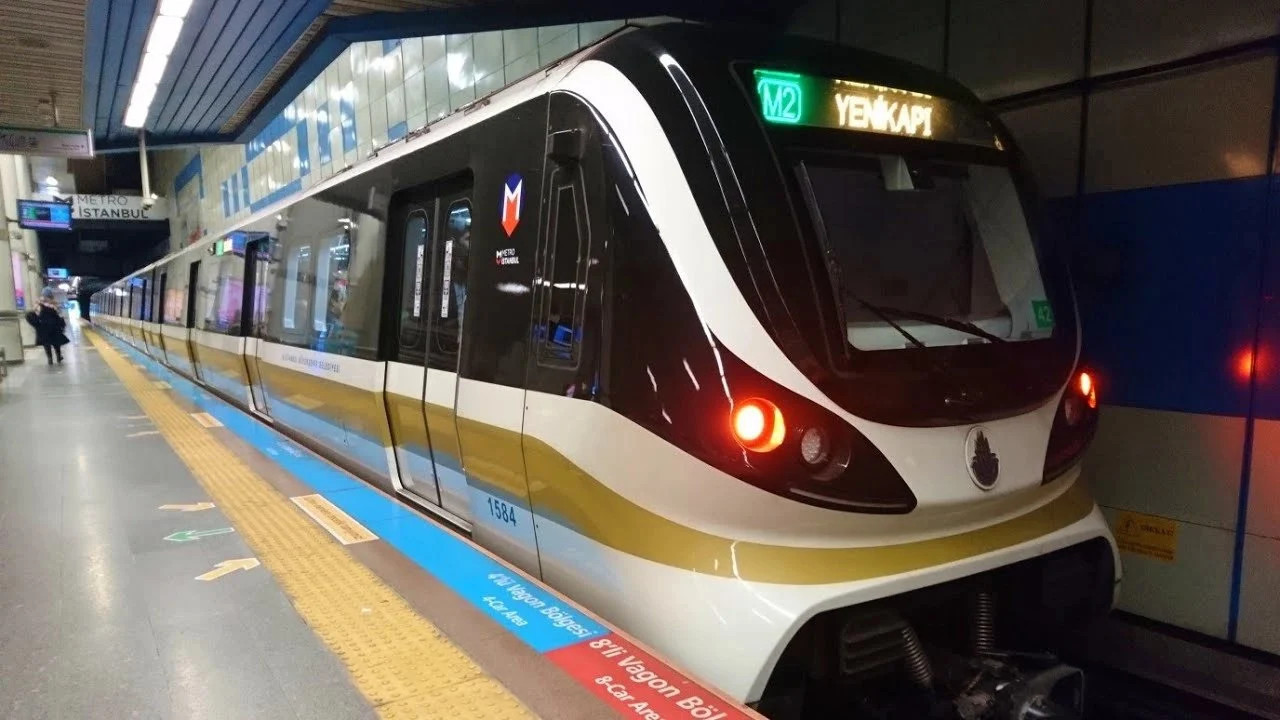
One of the most important developments for real estate investors is the completion of the Halkalı–Istanbul Airport metro corridor.
The final Halkalı–Arnavutköy section was officially opened in June 2026, completing the western connection within the broader Gayrettepe–Istanbul Airport–Halkalı metro system. Official sources state that the journey between Halkalı and Istanbul Airport has been reduced to approximately 30 minutes.
This is much more than a transportation improvement.
For the real estate market, better accessibility can change how investors evaluate an area, how tenants choose their homes and how developers identify future growth locations.
The key question is therefore:
Could the Halkalı–Istanbul Airport corridor become one of Istanbul's most attractive emerging real estate investment zones over the coming years?
The answer depends on several factors, including transportation accessibility, current property prices, development potential, rental demand and the quality of individual projects.
What Has Changed Along the Halkalı–Istanbul Airport Corridor?
For many years, transportation between Halkalı and Istanbul Airport relied significantly on road-based transportation.
The completion of the new metro connection changes this equation.
According to Türkiye's Ministry of Transport and Infrastructure, the final Halkalı–Arnavutköy section covers approximately 21.75 kilometers and includes stations such as Halkalı, Halkalı Stadium, Olimpiyatköy, Kayaşehir and İbn Haldun University. The line also integrates with several other rail systems.
Halkalı's integration with Marmaray is particularly important because it gives the area access to Istanbul's broader rail network.
The result is not simply a metro line between two points.
It is a new transportation corridor connecting several residential and developing districts with one of Turkey's most important international airports.
Why Does Transportation Matter So Much for Real Estate?
Accessibility is one of the fundamental drivers of real estate value.
A property becomes more attractive when residents can reach:
workplaces more easily;
airports faster;
schools and universities;
hospitals;
shopping centers;
business districts;
other parts of the city.
However, investors should avoid assuming that every property near a metro station will automatically experience the same price increase.
Transportation is one factor among many.
Property performance also depends on:
location;
construction quality;
supply and demand;
project reputation;
property size;
floor;
views;
facilities;
maintenance fees;
legal status;
surrounding development;
purchase price.
Therefore, the Halkalı–Istanbul Airport metro should be viewed as a potential value-supporting factor, not as a guaranteed source of capital appreciation.

Halkalı Is Becoming a Strategic Transportation Hub
Halkalı has become increasingly important because it sits at the intersection of several transportation networks.
Its strategic advantages include connections toward:
Istanbul Airport;
Marmaray;
Başakşehir;
Kayaşehir;
western Istanbul;
other metro corridors;
major road networks.
This makes the district particularly interesting for buyers who want a combination of residential convenience and investment potential.
For a family, accessibility can mean shorter commuting times.
For a tenant, it can mean more employment opportunities without needing to live immediately next to the workplace.
For an investor, it can mean a larger potential tenant pool.
Istanbul Airport Is an Economic Hub, Not Just an Airport
The investment significance of the metro corridor cannot be understood without considering Istanbul Airport itself.
The airport is a major international gateway serving tourism, business travel, aviation, logistics and international commerce.
Better connections between residential districts and the airport can therefore create demand from various groups, including:
airline employees;
airport staff;
logistics professionals;
hospitality workers;
international employees;
business travelers;
families;
long-term tenants;
investors.
This diversification can support residential and rental demand over time.
Which Areas Could Benefit Most?
The corridor should not be treated as a single real estate market.
Each district has different characteristics, development levels, prices and investment risks.
Halkalı
Halkalı is the most obvious starting point.
Its strongest advantage is connectivity, especially its integration with Marmaray and the new airport corridor.
This makes it attractive to investors looking for properties that combine accessibility with residential demand.
Kayaşehir
Kayaşehir is one of Istanbul's most significant modern development areas.
It has benefited from large-scale residential construction, new services, healthcare facilities and expanding transportation infrastructure.
Its connection to the Halkalı–Istanbul Airport corridor strengthens its position within the European side's emerging urban network.
Başakşehir
Başakşehir has already established itself as a major residential district.
It offers modern housing developments, family-oriented communities and extensive infrastructure.
Improved airport accessibility may strengthen the attractiveness of selected parts of the district, particularly for long-term residential investment.
Arnavutköy
Arnavutköy has a different investment profile.
Its proximity to Istanbul Airport and relatively large development areas make it particularly relevant for investors with longer investment horizons.
The new metro connection improves its relationship with Halkalı and other parts of Istanbul.
Table 1: Main Investment Areas Along the Corridor
|
Area |
Main Advantage |
Potential Investment Type |
Suitable Investor |
|
Halkalı |
Metro and Marmaray connectivity |
Rental and residential |
Medium/long-term investor |
|
Kayaşehir |
Modern urban development |
New residential projects |
Growth-oriented investor |
|
Başakşehir |
Strong infrastructure |
Family housing and rental |
Families and investors |
|
Arnavutköy |
Airport proximity and development land |
Long-term growth |
Long-term investor |
|
Areas between major hubs |
Multiple transport connections |
Residential projects |
Location-focused investor |

Does the Metro Automatically Increase Property Prices?
No.
This is one of the most important points for investors to understand.
It would be inaccurate to claim:
"The metro has opened, so every property nearby will rise by a specific percentage."
Real estate markets are much more complicated.
The effect of infrastructure depends on whether it creates genuine improvements in:
accessibility;
demand;
employment;
commercial activity;
rental demand;
urban development.
The market can also price future expectations into property values before a project is completed.
Therefore, investors should compare today's price with comparable properties rather than simply buying because a metro line has opened.
Proximity to the Metro vs. Buying Because of the Metro
These are two different concepts.
A property located within practical walking distance of a metro station can have a genuine usability advantage.
But buying a property simply because a metro station exists is not enough.
Investors should ask:
How far is the property from the station in real walking time?
Is the project itself high quality?
Is there genuine rental demand?
Are current prices already reflecting the expected infrastructure premium?
These questions can make a significant difference in investment performance.
Real Estate Investment Opportunities in Halkalı
There are several potential investment strategies.
Long-Term Residential Investment
This strategy focuses on buying and holding property for several years.
The investment thesis is based on:
population growth;
infrastructure improvements;
increasing services;
transportation accessibility;
potential demand growth.
Rental Investment
Transportation can be particularly important for rental properties.
Tenants typically evaluate:
rent + location + transportation + quality of housing.
A well-located apartment near public transportation can have a competitive advantage over an otherwise similar property in a poorly connected area.
Resale Investment
Liquidity matters when the investment strategy includes future resale.
Properties with strong accessibility, good project quality and desirable locations may have a broader potential buyer pool.
Why Is This Corridor Important for Foreign Investors?
International investors often want properties that are relatively easy to understand, rent and resell.
Transportation infrastructure makes the investment story easier to communicate.
A property located near a metro station connecting to Istanbul Airport can have a clear practical advantage.
However, investors should never rely solely on marketing statements.
They should independently verify:
title deed status;
valuation;
building permits;
project ownership;
developer history;
actual rental levels;
comparable sales.
Potential Impact on the Rental Market
One of the most important effects of transportation infrastructure is the expansion of the potential rental market.
Consider an employee working near Istanbul Airport.
If transportation is difficult, that employee may prefer to live close to the airport.
If metro access becomes significantly easier, the employee can consider a wider range of districts.
This may increase demand for properties in locations such as Halkalı, Kayaşehir and other connected areas.
The result can be a broader rental market.
However, investors should evaluate actual rental yields, not simply assume that rental demand will rise.
Ready Property or Off-Plan Property?
Both strategies have advantages and risks.
Ready-to-Move Property
Advantages include:
immediate inspection;
known building quality;
existing rental market;
easier assessment of the neighborhood;
potential immediate rental income.
Off-Plan Property
Potential advantages include:
lower entry prices in some cases;
payment plans;
potential capital appreciation during construction;
exposure to emerging districts.
However, risks may include:
construction delays;
developer risk;
changing market conditions;
financing costs;
differences between promised and delivered specifications.
Investors should therefore examine each development independently.
Table 2: Investment Strategies Along the Halkalı–Istanbul Airport Corridor
|
Strategy |
Main Advantage |
Risk Level |
Time Horizon |
|
Ready apartment for rental |
Immediate rental potential |
Medium |
Medium/long |
|
Off-plan apartment |
Potential growth during construction |
Medium/high |
Long |
|
Property very close to metro |
Strong accessibility |
Medium |
Medium/long |
|
Emerging development area |
Potential capital appreciation |
Relatively high |
Long |
|
Commercial property |
Potential benefit from increasing activity |
Medium/high |
Long |
Commercial Development Can Reinforce Residential Values
Transportation infrastructure often creates secondary effects.
Once a metro station becomes active, surrounding areas can gradually attract:
restaurants;
shops;
offices;
hotels;
healthcare services;
education;
retail;
local businesses.
This can transform a residential neighborhood into a more self-sufficient urban center.
For real estate investors, this is important because property value is influenced not only by transportation but also by the quality and availability of surrounding services.
Is Arnavutköy Better Than Halkalı?
There is no universal answer.
The two areas represent different investment profiles.
Halkalı benefits from stronger integration with existing transportation networks and established urban infrastructure.
Arnavutköy offers stronger exposure to airport-related development and long-term urban expansion.
Investors focused on:
liquidity, current services and established demand
may prefer Halkalı or more mature neighborhoods.
Investors seeking:
long-term development potential
may consider Arnavutköy and selected emerging areas.
The correct comparison should always be based on individual properties and their prices, not simply district names.
Why Kayaşehir Deserves Special Attention
Kayaşehir occupies a strategic position within the new transportation network.
Its urban development has accelerated over recent years, with modern housing, healthcare, education and commercial facilities.
The connection to the Halkalı–Istanbul Airport corridor strengthens its accessibility.
The Ministry of Transport has highlighted the integration of the line with the Bakırköy–Kirazlı–Başakşehir–Kayaşehir metro at Kayaşehir station.
This kind of integration can be more important than a single metro station because passengers gain access to a broader transportation network.
What Does the Project Mean for Başakşehir?
Başakşehir already has a relatively mature residential market.
Its strengths include:
modern housing;
family-oriented communities;
healthcare;
education;
shopping;
transportation infrastructure.
Improved access to Istanbul Airport can add another layer of attractiveness.
But investors should avoid buying simply because a property is advertised as being "in Başakşehir."
The important questions are:
Which neighborhood?
Which project?
How far is the nearest station?
What is the price per square meter?
What is the actual rental demand?
Infrastructure Creates an Investment Cycle
Urban areas often move through several stages:
Project announcement.
Construction.
Growing investor expectations.
Opening.
Increased usage.
Expansion of surrounding services.
Market maturity.
The Halkalı–Istanbul Airport corridor has now entered the crucial stage of actual operation.
The final section opened in June 2026, and the Ministry of Transport later reported that the line carried 53,396 passengers on June 22, 2026, shortly after the final section became operational.
This does not guarantee real estate appreciation, but it demonstrates that the transportation corridor is being actively used.
How Should Investors Select a Property?
Instead of asking only whether a property is "near the metro," investors should use a broader checklist.
Walking distance
Measure actual walking distance to the station.
Project quality
Evaluate:
building age;
construction quality;
management;
amenities;
maintenance fees.
Price per square meter
Compare similar properties rather than relying on total price.
Rental potential
Compare realistic rental values.
Liquidity
Look at actual transactions and demand.
Urban planning
Study future projects surrounding the property.
Legal status
Verify title deed and permits.
Developer reputation
For new projects, examine the developer's track record.
Why Could the Next Few Years Be Important?
The investment story is not only about today's transportation network.
A combination of:
metro + airport + highways + residential development + commercial activity + available land
can create a long-term urban growth corridor.
This is why Halkalı–Istanbul Airport is attracting attention.
The investment opportunity is not simply about being close to an airport.
It is about being connected to multiple economic and residential centers.
Risks Investors Should Not Ignore
Despite the opportunities, investors should consider several risks.
Overpricing
Some properties may already include the expected infrastructure premium in their asking prices.
Oversupply
Large-scale construction can increase competition between properties.
Economic conditions
Interest rates, inflation and purchasing power can influence demand.
Currency fluctuations
Foreign investors may face exchange-rate risks.
Uneven district performance
Not every neighborhood will benefit equally.
Marketing-driven expectations
Investment decisions should never depend exclusively on claims that infrastructure will produce a specific percentage increase.
A Smart Investment Strategy
A practical strategy can include five steps.
Step 1: Define the objective
Are you buying for:
residence;
rental income;
resale;
long-term appreciation;
Turkish citizenship, if the property and transaction meet the applicable legal requirements?
Step 2: Establish a full budget
Consider:
purchase price;
taxes;
title deed expenses;
valuation;
legal fees;
furnishing;
maintenance;
management.
Step 3: Compare districts
Compare Halkalı, Kayaşehir, Başakşehir and Arnavutköy rather than choosing one automatically.
Step 4: Compare properties
Review several comparable properties before making an offer.
Step 5: Think long term
Ask:
What will this area look like in five or ten years?
That question is often more important than asking how attractive the neighborhood is today.
Short-Term Opportunity or Long-Term Opportunity?
The strongest potential of the corridor is likely to emerge over the medium and long term.
Infrastructure does not transform a property market overnight.
The real impact develops as:
residents use the line;
businesses relocate;
services expand;
new projects are completed;
rental markets adjust;
investors reassess locations.
For this reason, long-term investors may be better positioned to benefit from the broader urban transformation than investors looking for quick gains.
How Could the Corridor Reshape Istanbul's Real Estate Map?
For many years, Istanbul's property market was heavily concentrated around established central districts.
However, rising prices and urban expansion have encouraged investors to explore emerging locations.
Transportation changes the equation.
When a developing district becomes connected to an international airport and a wider metro network, geographical distance becomes less significant.
This can shift investment attention toward new urban corridors.
The Halkalı–Istanbul Airport corridor therefore has implications beyond Halkalı itself.
Its impact can extend across the connected districts and neighborhoods along the wider transportation network.
Smart Investors Do Not Simply Chase Metro Stations
One of the most common mistakes is buying a property solely because a new metro station exists.
A stronger investment thesis requires several factors to work together:
Good location + strong transportation + reasonable price + genuine demand + quality project + resale potential.
When these factors align, the investment case becomes much stronger.
A poorly priced or legally problematic property does not become a good investment simply because it is near a metro station.
Conclusion
The Halkalı–Istanbul Airport corridor represents one of Istanbul's most important infrastructure developments in 2026.
The completion of the final section has significantly strengthened transportation between western Istanbul and Istanbul Airport, with official sources indicating a travel time of approximately 30 minutes between Halkalı and the airport.
For real estate investors, the most interesting areas include Halkalı, Kayaşehir, Başakşehir and Arnavutköy, although each offers a different investment profile.
The right question is not:
"Will the metro increase property prices?"
Instead, investors should ask:
"Which properties can genuinely benefit from improved accessibility, and is the current purchase price reasonable compared with the property's future potential?"
That distinction separates strategic investment from speculation.
The new corridor does not guarantee appreciation for every property. However, it creates a stronger infrastructure environment that can support residential demand, rental activity, commercial development and long-term urban transformation.
For investors with a medium- to long-term horizon, Halkalı–Istanbul Airport can therefore represent one of the promising emerging real estate corridors in Istanbul, provided that property selection, pricing, legal due diligence and financial analysis are carried out carefully.
FAQ
According to official information following completion of the corridor, the journey between Halkalı and Istanbul Airport takes approximately 30 minutes.
Halkalı, Kayaşehir, Başakşehir and Arnavutköy are among the areas worth studying, particularly properties with practical access to stations and strong connections to other transportation networks.
Not necessarily. Improved transportation can strengthen demand and attractiveness, but prices also depend on supply, demand, economic conditions, project quality, location and the property's purchase price.